Stroke Rehabilitation
Stroke Patient Rehabilitation: How does physical therapy contribute to rebuilding neural pathways and restoring independence?
Stroke is one of the leading causes of long-term motor impairment, with symptoms appearing as weakness or hemiplegia, loss of balance, and difficulty controlling voluntary movements. Sometimes, the effects of a stroke are not limited to actual paralysis but extend to affecting the patient's ability to perform simple daily functions independently, such as walking or getting dressed.
The role of modern physical therapy relies on the concept of "Neuroplasticity," which is the brain's ability to reorganize itself and create new neural pathways to replace damaged cells through intensive and continuous motor training.
The Treatment Plan at Sumo Center:
At Sumo Center, we offer advanced and intensive neuro-rehabilitation programs focused on returning the patient to their normal life. These include:
• Intensive Motor Rehabilitation: Customized exercises to stimulate weak muscles and restore voluntary movement to the upper and lower limbs.
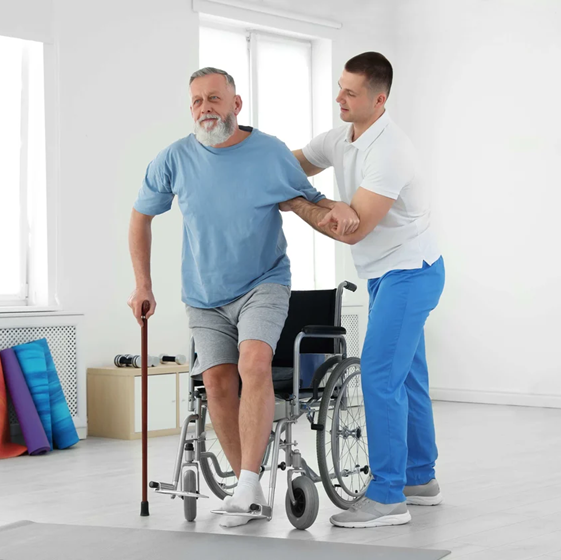
• Balance and Gait Training: Using scientific methods to retrain the body's center of balance and improve gait patterns to protect the patient from falls.
• Occupational Therapy and Repetitive Activities: Integrating goal-directed repetitive movements (like grasping objects) to accelerate the nervous system's response.
Scientific Evidence:
Clinical studies confirm that early and intensive physical therapy intervention after a stroke is the cornerstone for achieving the highest levels of motor recovery. It directly contributes to improving limb function, increasing gait quality, and significantly enabling the patient to regain their daily independence.
Study link:
https://pmc.ncbi.nlm.nih.gov/articles/PMC12441918/